The Black Tie Dress Code
The Black Tie dress code
A Black Tie invitation calls for a precise formal language. Understanding its principles makes dressing for a gala, awards ceremony or private dinner straightforward.
Black Tie does not mean an ordinary black business suit. Daywear does not carry the specific details expected at a formal evening event.
Black Tie is a formal dress code shaped over more than a century. These are the essential principles behind a properly composed tuxedo.
1. The defining features of a tuxedo
A standard black suit is not a tuxedo. The defining distinction is the considered use of silk or satin.
Lapels: shawl or peak lapels are faced in lustrous satin, catching evening light in a way that separates formalwear from daywear.
Buttons: the buttons are covered in satin to match the lapel facing.
Trouser braid: a vertical satin galon runs along the outer seam of formal trousers.
2. The formal shirt
An evening shirt is white, often with a pleated or piqué front for appropriate formality.
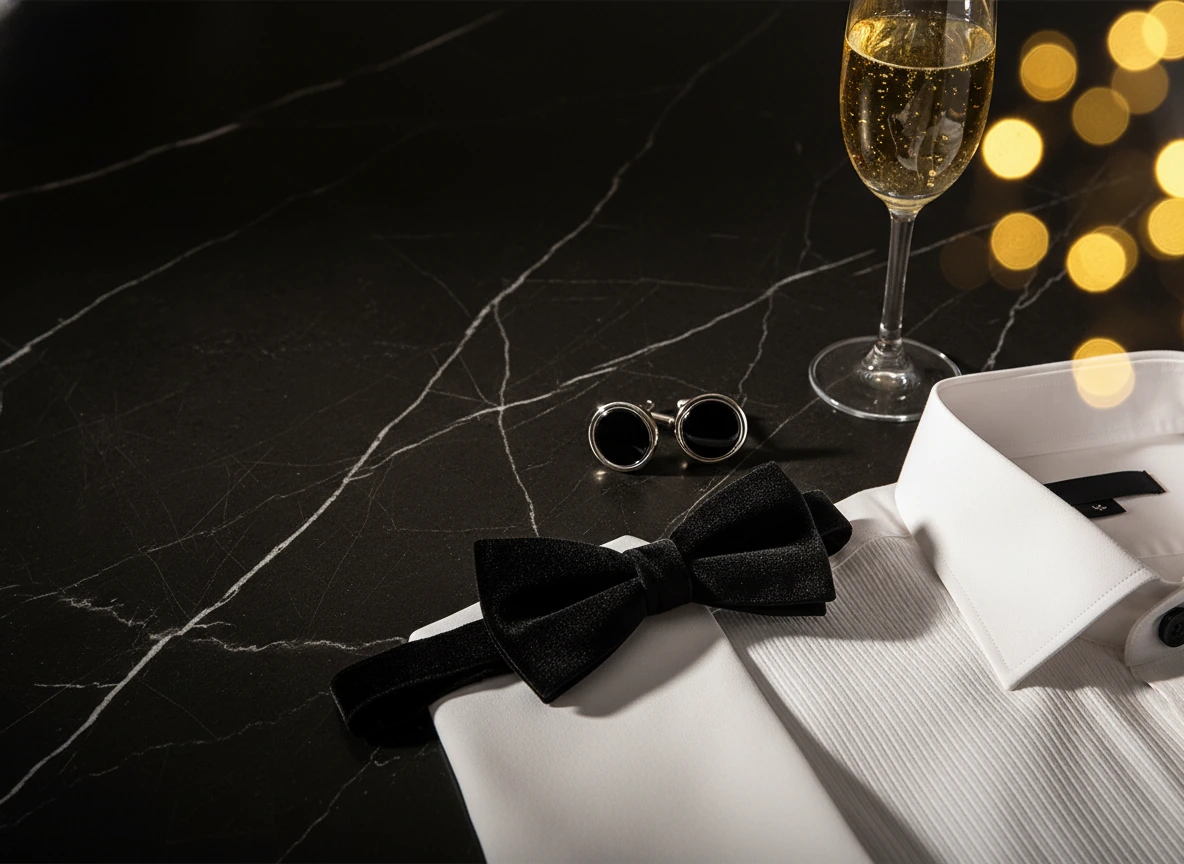
French cuffs take refined metal or stone cufflinks, while black studs may replace visible front buttons.
3. Bow tie and cummerbund
The black bow tie is essential; a long tie is not an equivalent. A hand-tied bow has a natural, individual shape that a pre-tied bow cannot reproduce.
Traditional formal trousers have no belt loops. A cummerbund may refine the waistline and is worn with its pleats facing upward.
4. Choosing footwear
Patent leather Oxfords or velvet loafers complement a tuxedo, with their finish echoing the lustre of the lapels.
Top Impetus considers the complete evening composition, creating a tailored tuxedo that lets its wearer step into the occasion with confidence.