A Gentleman’s Guide to Ties and Pocket Squares
A gentleman’s guide to ties and pocket squares
If a suit is the canvas, accessories provide the final composition. A tie and pocket square communicate attention and personal taste.
Even an excellent suit can be undermined by a poor tie or an awkward pocket-square pairing. A coherent image depends on how these details work together.
1. The tie: a visual centre
The rule of width: match the widest part of the tie to the widest part of the lapel. A classic business lapel around 8–9 cm calls for a tie of similar scale; imbalance in either direction disrupts proportion.
Controlling length: once tied, the tip should just reach the top edge of the belt buckle.
2. The pocket square: understated elegance
A pocket square separates simply wearing a suit from composing an outfit. A small square can lift a dark suit and add depth without feeling excessively formal.
Three principles for pairing
Avoid exact matching sets: using precisely the same pattern and material for tie and square can look rigid and impersonal.
Principle one — colour dialogue: let the square echo another colour in the outfit. A navy tie with gold dots might be paired with gold, cream or white.
Principle two — texture contrast: pair a lustrous silk tie with linen or wool to add tactile depth.
3. Different folds, different moods
Presidential fold: a neat rectangle with roughly one centimetre visible. It is the cleanest and most formal choice for serious business settings.
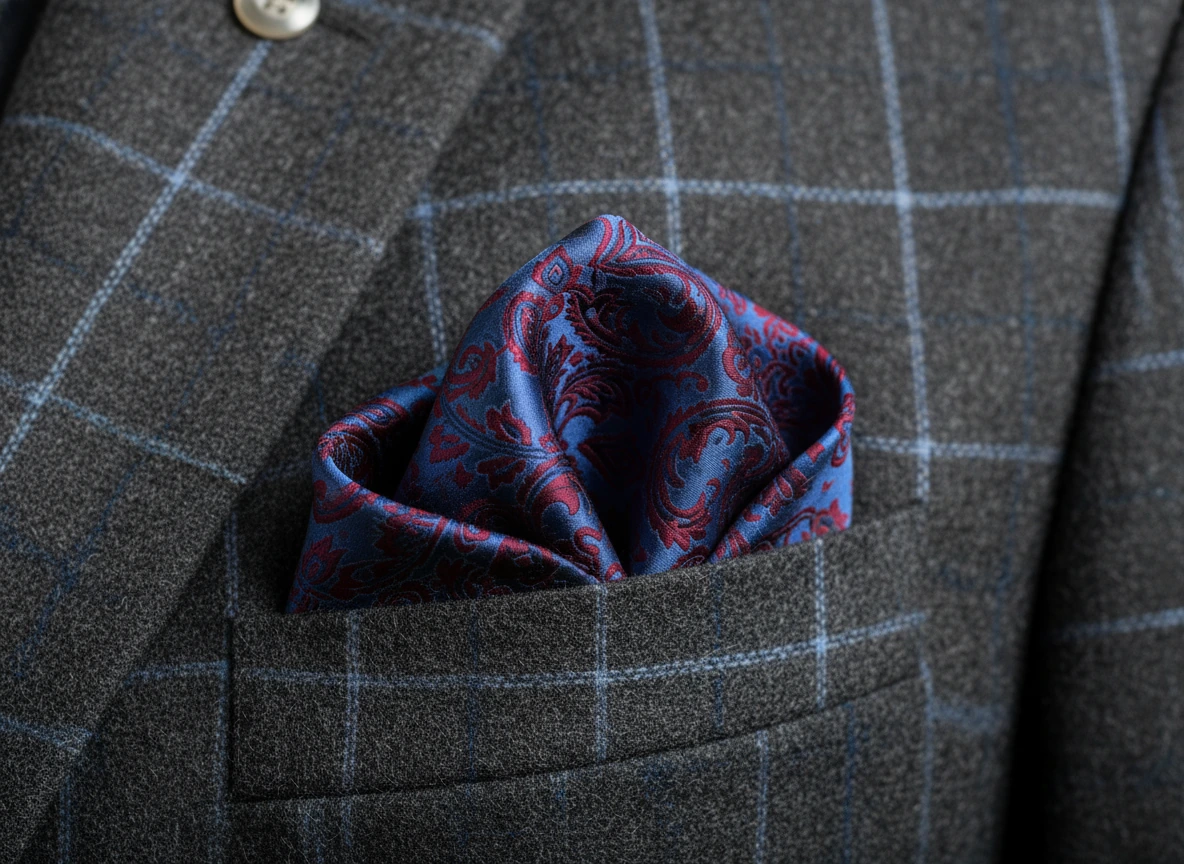
Puff fold: gather the centre and place it naturally in the pocket. Its softer shape suits dinners, dates and smart-casual dressing.
Top Impetus offers Italian hand-finished ties and silk pocket squares. These quiet details speak clearly about taste and personal style.