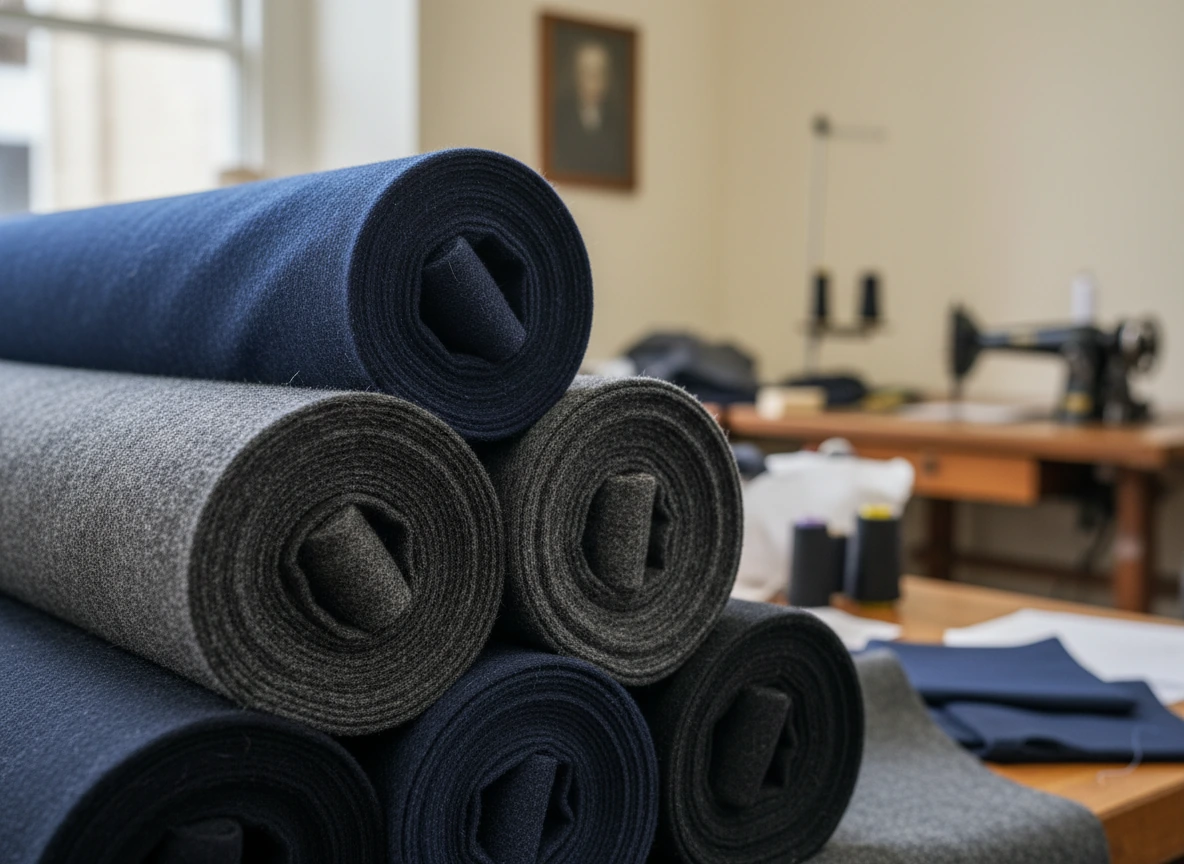
A Guide to Australian Merino Wool
A guide to Australian Merino wool
If cut is the structure of a suit, cloth is its character. Among the many choices available for consultation, Australian Merino wool remains one of our most valued recommendations.
Why Merino wool?
1. Breathable luxury for a warm, humid climate
In a warm, humid climate, breathability is essential. Basic synthetic blends can trap heat and moisture against the body.
Merino wool has a complex natural fibre structure that can absorb and release moisture. In a finely woven suit this supports greater comfort through warmer weather.
2. Drape and crease recovery for business travel
For frequent travellers, crease recovery matters. Lower-quality cloth can quickly develop persistent folds at the elbow and knee.
Quality Merino fibres have a natural crimp that supports elasticity and recovery. After a long day or flight, airing the garment allows the cloth to relax and recover its line.
3. Understanding Super numbers
Fabric books often show terms such as Super 110s, 130s or 150s. What do they mean?
In simple terms, the number relates to fibre fineness. A higher number generally feels finer and more lustrous, but the best choice depends on how the suit will be worn.
Super 100s–120s: a practical balance of durability and crease resistance for regular business wear.
Super 130s–150s: a finer handle and greater lustre for important meetings while retaining useful practicality.
Super 180s and above: exceptionally soft and luxurious, but more delicate and best reserved for formal occasions.
4. The Top Impetus fabric library
We select superfine Australian Merino wool from established mills, spanning structured British cloths and lighter Italian fabrics from names such as VBC and Loro Piana.
A good cloth helps a suit age gracefully. It offers comfort while quietly expressing the wearer’s taste.